
From Brussels, the European Union’s green transition appears structured, ambitious, and increasingly inevitable. Regulations are negotiated, targets are set, and the path toward zero-emission mobility is carefully mapped out through instruments such as Regulation (EU) 2019/631. Yet beyond the borders of the Union, the same transition looks far less coordinated — and far more uneven.
For countries like Serbia, the green transition is not a policy they shape, but a reality they adapt to.
One of the most visible effects is the growing flow of second-hand vehicles. As emission standards tighten within the EU, older cars gradually lose their place in the European market. However, these vehicles do not simply disappear. Instead, they are exported, often as “used goods” rather than classified “waste”, and find new life in neighbouring markets. In practice, this predicts that while emissions may be reduced within the EU, they are not necessarily reduced globally — only relocated.

This dynamic is reinforced by economic reality. For many consumers outside the EU, including in Serbia, electric vehicles remain significantly more expensive than traditional alternatives. Limited charging infrastructure, lower purchasing power, and the absence of large-scale subsidy schemes further slow the adoption of cleaner technologies. As a result, the transition unfolds at a different pace, shaped less by regulation and more by affordability.
At the same time, the external dimension of the green transition extends beyond consumption and into production. The shift toward electric mobility has dramatically increased demand for critical raw materials, particularly lithium. While the EU is developing regulatory frameworks to ensure more sustainable supply chains, such as the EU Batteries Regulation and the Critical Raw Materials Act, the extraction of these resources often takes place outside its borders. Countries like Serbia are increasingly discussed as potential contributors to this supply, raising questions about environmental standards, local impacts, and the distribution of benefits.
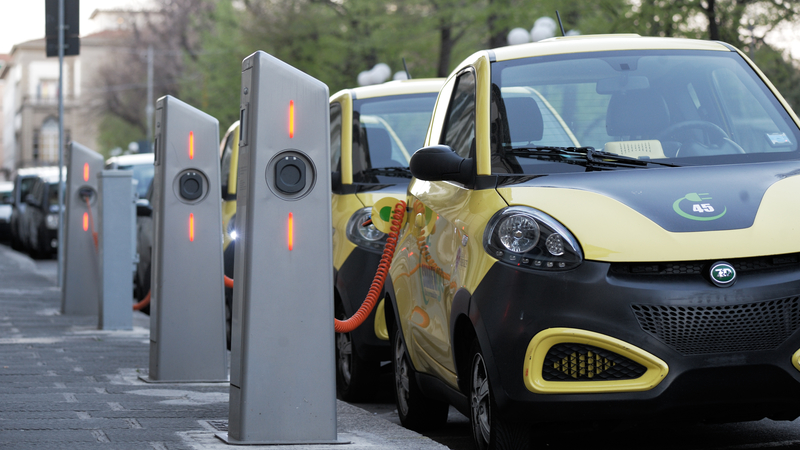
On one hand, the EU is building one of the most advanced regulatory systems for climate policy in the world. On the other, the global footprint of that system remains uneven. Environmental gains within the Union can be accompanied by externalized costs — whether through the relocation of emissions via used vehicles or through the environmental burden of resource extraction in third countries.
None of this suggests that the green transition is misguided. Rather, it highlights that its effects are not confined to the territory in which it is legislated.
For the non-EU countries, the challenge lies in navigating this dual role: as both a recipient of the transition’s side effects and a potential participant in its supply chains. The absence of formal decision-making power makes this position particularly complex. Policies are adopted elsewhere, but their consequences are felt locally.
Ultimately, the question is not whether the green transition will extend beyond the EU — it already does. The question is whether it will do so in a way that is coordinated, inclusive, and fair, not just in theory and law, but in real life practice and under the table.
Without a stronger focus on its external dimension, the EU risks building a transition that is internally consistent, but globally incomplete.